How AI Search is Changing Digital Marketing: GEO vs SEO in 2026
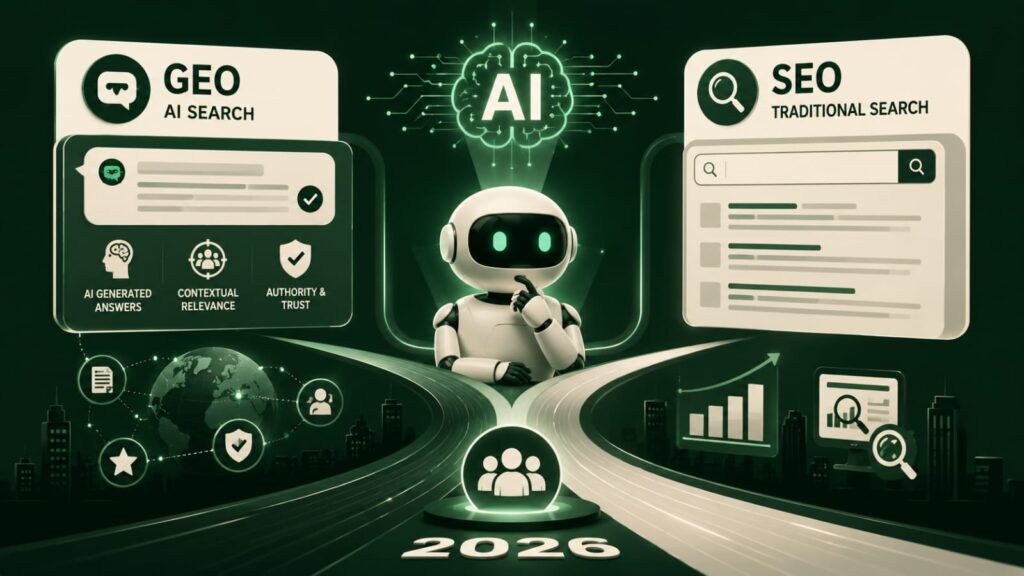
The Search Game Has Changed
For years, businesses focused on Search Engine Optimization (SEO) to rank higher on Google and drive website traffic. But in 2026, a new player is reshaping the digital marketing landscape: Generative Engine Optimization (GEO).
With AI-powered platforms like ChatGPT, Gemini, and other generative search tools becoming part of everyday online experiences, users are no longer just searching for links—they’re asking questions and receiving direct answers.
This shift is changing how brands create content, build authority, and attract customers online.
What is SEO?
Search Engine Optimization (SEO) is the practice of optimizing websites and content to rank higher in traditional search engine results.
SEO focuses on:
- Keyword research
- On-page optimization
- Backlink building
- Technical website performance
- User experience
The goal is simple: increase visibility on search engines and drive traffic to your website.
Example:
A user asks an AI assistant:
“What are the best digital marketing courses for beginners in India?”
Instead of showing ten blue links, the AI generates a complete answer based on information gathered from trusted sources.
The goal of GEO is to ensure your content is among those trusted sources.
GEO vs SEO: What’s the Difference?
| SEO | GEO |
|---|---|
| Focuses on search engine rankings | Focuses on AI-generated answers |
| Relies heavily on keywords | Relies on context, expertise, and authority |
| Optimized for clicks | Optimized for citations and recommendations |
| Targets Google and search engines | Targets AI assistants and generative search platforms |
| Measures traffic and rankings | Measures visibility and brand mentions |
Why GEO Matters in 2026
The way people search online is evolving rapidly.
Users now expect:
- Instant answers
- Personalized recommendations
- Conversational interactions
- Less time spent browsing multiple websites
As AI-generated responses become more common, businesses that only focus on traditional SEO may miss valuable visibility opportunities.
Brands that adapt to GEO can:
- Increase brand awareness
- Build authority in their niche
- Gain more qualified leads
- Stay ahead of competitors
How to Optimize Content for GEO
1. Create Helpful, In-Depth Conten
AI systems prioritize content that provides clear, useful, and accurate information.
Instead of creating content solely around keywords, focus on solving real user problems
2.Demonstrate Expertise
Include:
- Personal experiences
- Industry insights
- Case studies
- Original research
- Expert opinions
Content backed by real expertise is more likely to be referenced by AI systems.
3. Use Question-and-Answer Formats
AI tools often pull information from content that directly answers user questions.
Examples:
- What is GEO?
- How does AI search work?
- Why is GEO important for businesses?
4. Structure Content Clearly
Use:
- Headings
- Bullet points
- Tables
- FAQs
Well-structured content is easier for AI systems to understand and summarize.
5. Build Brand Authority
The stronger your online presence, the more likely AI systems are to recognize your brand as a trusted source.
Focus on:
- Publishing quality content consistently
- Earning backlinks
- Building social proof
- Engaging with your audience
The Future of Digital Marketing
The future isn’t about choosing between SEO and GEO.
Successful marketers will combine both strategies.
SEO helps your content rank in traditional search engines, while GEO helps your content become part of AI-generated conversations.
Businesses that embrace both approaches will be better positioned to reach audiences wherever they search.
Final Thoughts
AI search is transforming the way people discover information online. While SEO remains important, GEO is emerging as a powerful strategy for brands that want to stay visible in an AI-driven world.
The marketers who understand this shift today will be the ones leading the digital landscape tomorrow.
Instead of asking, “How do I rank higher?” the better question in 2026 is:
“How do I become the source AI trusts?”
Ready to Future-Proof Your Digital Marketing Strategy?
Whether you’re a business owner, marketer, or student exploring the future of search, now is the perfect time to start learning GEO alongside traditional SEO.
Follow me on LinkedIn for more insights on digital marketing, AI trends, content strategy, and personal branding.
Have thoughts on GEO vs SEO? Share them in the comments below—I’d love to hear your perspective!
Let’s connect, learn, and grow together in the age of AI-powered marketing.